


'%20x='0'%20y='0'%20height='100%25'%20width='100%25'%20%0A%20%20%20%20%20%20%20%20%20%20xlink%3Ahref='data:image/jpg;base64,/9j/2wBDAAYEBQYFBAYGBQYHBwYIChAKCgkJChQODwwQFxQYGBcUFhYaHSUfGhsjHBYWICwgIyYnKSopGR8tMC0oMCUoKSj/2wBDAQcHBwoIChMKChMoGhYaKCgoKCgoKCgoKCgoKCgoKCgoKCgoKCgoKCgoKCgoKCgoKCgoKCgoKCgoKCgoKCgoKCj/wgARCAAGAAoDASIAAhEBAxEB/8QAFgABAQEAAAAAAAAAAAAAAAAAAAYH/8QAFAEBAAAAAAAAAAAAAAAAAAAABP/aAAwDAQACEAMQAAAAhN3HE//EAB4QAAICAgIDAAAAAAAAAAAAAAIDAQQABQYSEzGh/9oACAEBAAE/ANddDUcafaGGixBLf5UHIM7DP0c1W6O9q6dsoMCsJBsjBeuwxOf/xAAWEQEBAQAAAAAAAAAAAAAAAAABAgD/2gAIAQIBAT8AmmVDf//EABYRAQEBAAAAAAAAAAAAAAAAAAECAP/aAAgBAwEBPwCpEF3/2Q=='%3E%3C/image%3E%3C/svg%3E)

Guillermo del Toro’s gothic drama film Frankenstein, based on Mary Shelley’s classic novel, was released in limited theatres on October 17, 2025, before its global debut on Netflix on November 7, 2025.
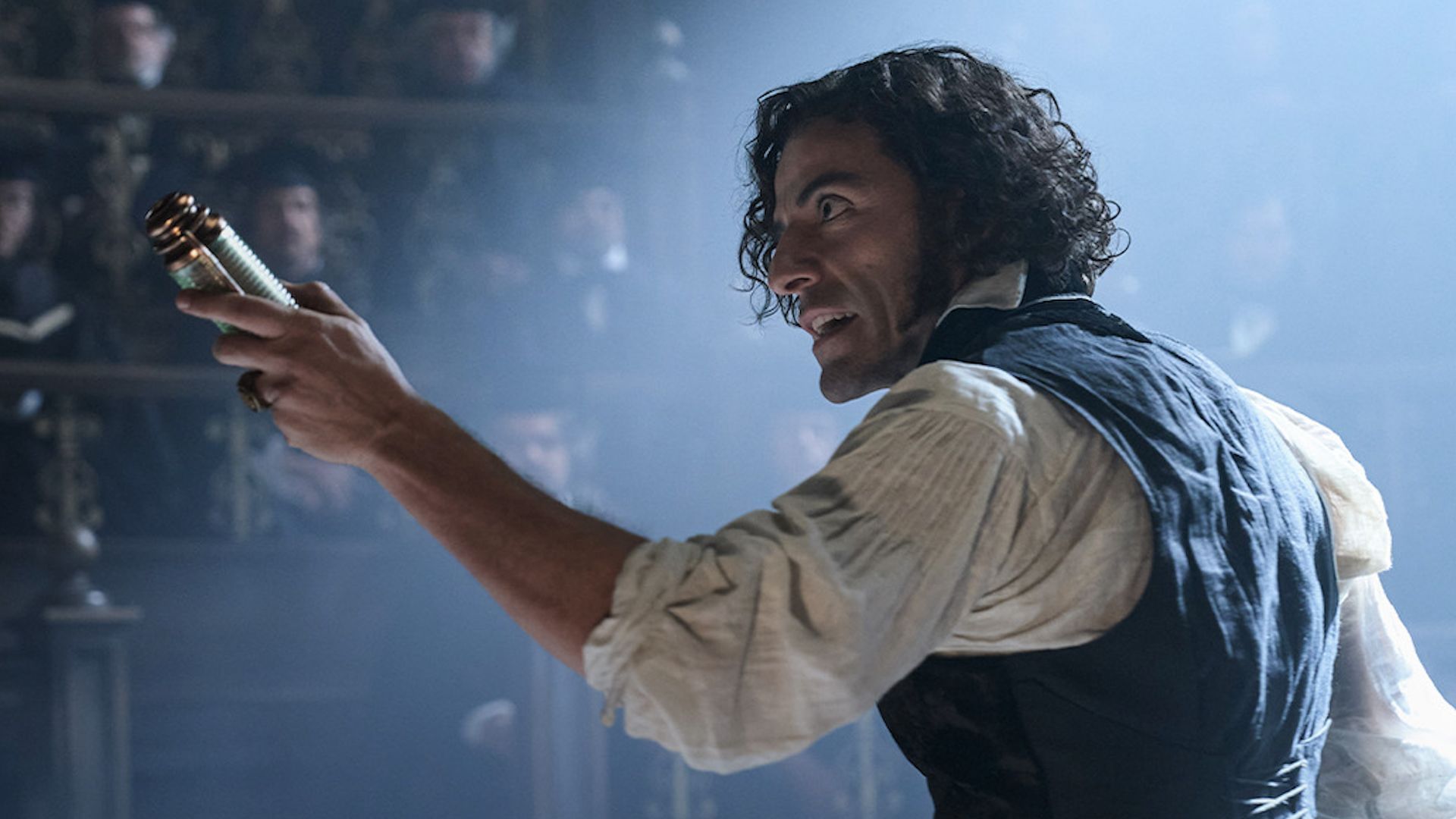
The film tells the story of the tragic relationship between the brilliant yet emotionally tormented scientist Victor Frankenstein (Oscar Isaac) and his sentient creation (Jacob Elordi). The plot follows Victor’s relentless quest to conquer death, which results in a Creature capable of immense emotional depth and superhuman strength.
While the major elements are faithful to those of the novel, Del Toro's film adaptation takes significant creative liberties with the source material. One of those is the character of Elizabeth (Mia Goth), who is reimagined as Victor’s brother William's fiancée.
 Trending
The film also introduces an abusive father figure to Victor making his cruelty toward the Creature a direct reflection of inherited psychological trauma.
Major differences between Guillermo del Toro’s Frankenstein and Mary Shelley’s novel
Shelley’s classic is a story of expanding intellect: a scientist punished for trespassing into the divine territory. Del Toro uses emotional truth in place of scientific horror while maintaining the Gothic style. His Frankenstein is more about man learning to forgive himself than it is about man acting as God. In an interview with Variety, del Toro stated:
“The usual discourse of Frankenstein has to do with science gone awry. But for me, it’s about the human spirit. It’s not a cautionary tale: It’s about forgiveness, understanding and the importance of listening to each other.”
1) The Creature

In Shelley’s original, the Creature is expressive, self-educated, and capable of deep feeling, but ultimately becomes a murderer. He kills Victor’s brother William, his friend Henry Clerval, and his bride Elizabeth in revenge for his creator’s abandonment. His violence is meant as poetic justice: an outcry from one who was denied love.
Del Toro’s Creature, while still articulate, is shown as a victim rather than a villain. His violence is defensive, not malicious; the murders of William and Elizabeth are altered in this version, and secondary characters like Clerval and Justine are removed. The Creature becomes less a warning about science and more a mirror for human loneliness.
2) Victor's Father

Del Toro’s most significant addition is the character of Baron Leopold Frankenstein (Charles Dance), a dominating and emotionally abusive father. In the novel, Victor’s father, Alphonse, is kind and passive. In the film, he is cold and cruel, shaping Victor’s obsessions and his eventual cruelty toward his own creation.
This change reframes Frankenstein as a story of generational trauma. Victor’s act of creation becomes a desperate attempt to escape his father’s shadow, yet he repeats the same cycle of rejection.
3) Elizabeth Harlander

Mary Shelley’s Elizabeth Lavenza is the classic Gothic heroine: gentle, passive, and cursed. Del Toro reimagines her as a figure of intellect and free will. Played by Mia Goth, Elizabeth is a scientist and entomologist who embodies compassion rather than fragility. She challenges Victor’s cruelty and empathizes with the Creature, becoming the film’s moral compass.
Del Toro's Elizabeth anchors the human dimension, bridging the emotional gap between creator and creation, whereas Shelley's women exist on the sidelines.
4) Frankenstein's conclusion

Shelley’s novel ends in utter despair as Victor dies aboard an Arctic ship, still consumed by vengeance, while his Creature mourns and vows to end his own life in the frozen wilderness.
In the film, Victor survives long enough to meet his Creature one last time on the ship. Victor apologizes for his cruelty and fear, and the Creature forgives him. As dawn breaks, the Creature chooses to live not as a monster, but as a survivor.
Stay tuned for more updates.


