


'%20x='0'%20y='0'%20height='100%25'%20width='100%25'%20%0A%20%20%20%20%20%20%20%20%20%20xlink%3Ahref='data:image/jpg;base64,/9j/2wBDAAYGBgYHBgcICAcKCwoLCg8ODAwODxYQERAREBYiFRkVFRkVIh4kHhweJB42KiYmKjY+NDI0PkxERExfWl98fKf/2wBDAQYGBgYHBgcICAcKCwoLCg8ODAwODxYQERAREBYiFRkVFRkVIh4kHhweJB42KiYmKjY+NDI0PkxERExfWl98fKf/wgARCAAFAAoDASIAAhEBAxEB/8QAFgABAQEAAAAAAAAAAAAAAAAAAAUG/8QAFAEBAAAAAAAAAAAAAAAAAAAABf/aAAwDAQACEAMQAAAAytIDZ//EACEQAAECBgIDAAAAAAAAAAAAAAECAwAEBQYREiMxkbHC/9oACAEBAAE/AGr6rrq550zKwQwrXB62wD6gXzWsDmX5B+Y//8QAGBEAAgMAAAAAAAAAAAAAAAAAAAEDMXH/2gAIAQIBAT8AmW2f/8QAFhEAAwAAAAAAAAAAAAAAAAAAAAPB/9oACAEDAQE/AFw//9k='%3E%3C/image%3E%3C/svg%3E)

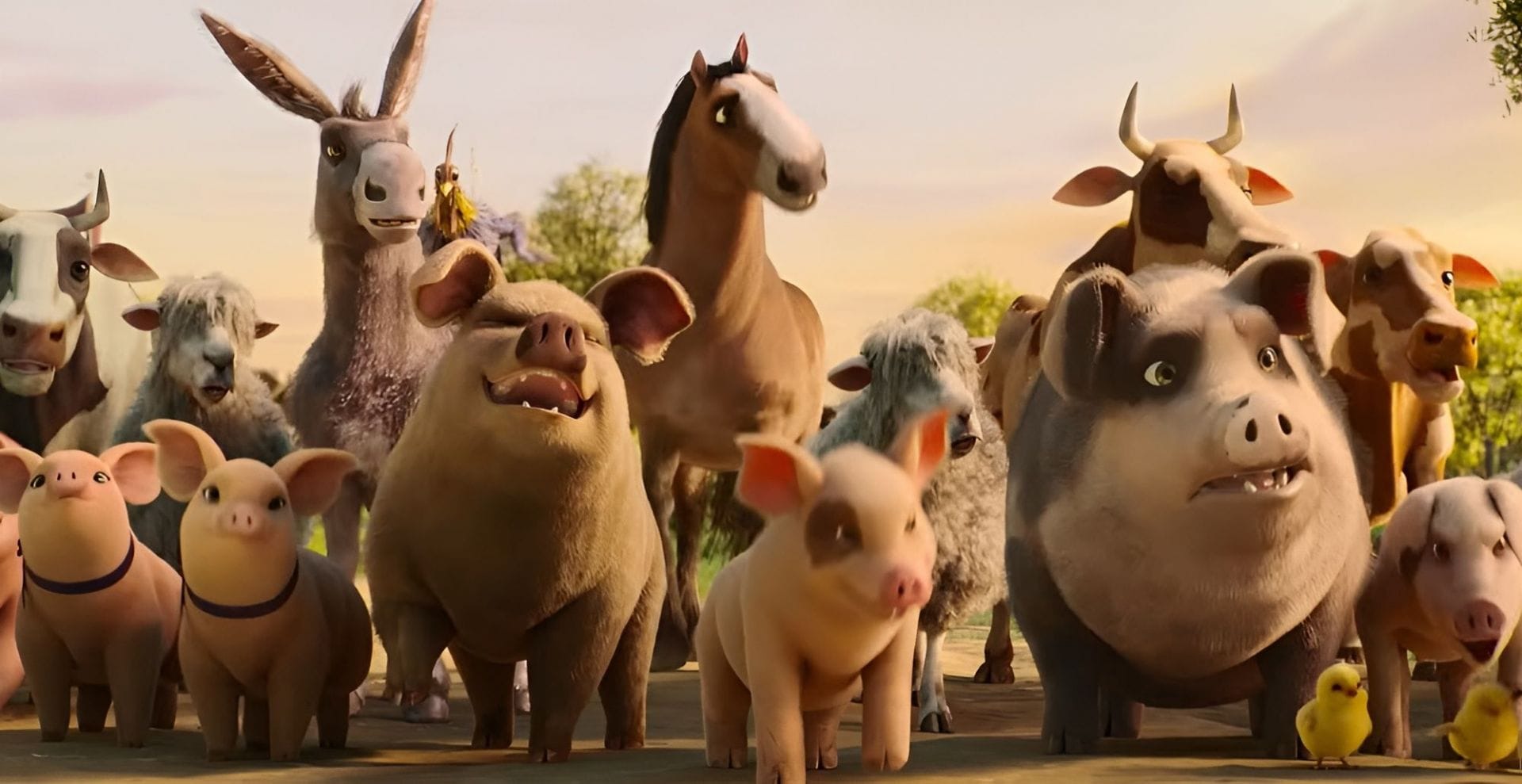
The first preview of Andy Serkis' animated adaptation of Animal Farm has just dropped, set to hit US theaters on May 1, 2026. Based on George Orwell’s 1945 novella, the film presents a noticeably different tone and structure from the original text, according to footage shown in the teaser.
The preview suggests a shift toward a more colorful and accessible animated style, featuring expanded story elements, additional characters, and lighter moments not found in Orwell’s work.
The original novella is widely regarded as a political allegory centered on power, control, and the corruption of revolutionary ideals, while the teaser suggests a broader fantasy-adventure approach aimed at a general audience.
The movie helmed by Andy Serkis, penned by Nicholas Stoller, marks the third big-screen take on Animal Farm. Following the 1954 cartoon, a 1999 live-action television version was also produced. Voices come from Seth Rogen, Gaten Matarazzo, Woody Harrelson, Steve Buscemi, Glenn Close, and Kieran Culkin, along with Laverne Cox, Jim Parsons, Kathleen Turner, Iman Vellani, and Serkis.
 Trending
Animal Farm (2026): Narrative changes and creative intent

One of the most significant changes highlighted by the trailer is the introduction of new characters, particularly Lucky, a piglet voiced by Gaten Matarazzo, who does not appear in Orwell’s book.
In a recent interview with Hollywood Reporter, director Andy Serkis explained:
''We’ve been trying to create a version of George Orwell’s extraordinary fable for well over a decade, and it’s been an incredibly challenging conundrum with many twists and turns along the way.”
Lucky is positioned between Snowball, voiced by Laverne Cox and reimagined as a female character, and Napoleon, voiced by Seth Rogen, whose rise to power drives the story's central conflict.
Serkis has stated that while changes were made, the film retains the core structure of Orwell’s narrative.
“Most of the major plot points are intact. Sure, it’s not a windmill in our version — it’s a watermill — but that’s symbolic. The ending, too: In the book, the animals look through the window and can’t tell the pigs from the men. We have that moment, but we also live in such a bleak world, and we didn’t want to end on a fake, upbeat note. At the same time, we didn’t want to leave people feeling hopeless.''
The film also expands the story through new antagonistic figures, including Glenn Close’s Freida Pilkington, a billionaire agribusiness magnate seeking control of Animal Farm, a character created specifically for this adaptation.
Animal Farm (2026): Political themes and modern context
Although Orwell’s novella was written as an allegory for Soviet Russia, Serkis has described his adaptation as a modern reinterpretation rather than a period-specific retelling.
“We worked very closely with the Orwell estate. We told them from the start that we wanted to do a version where, if George Orwell were writing it today — and this was more than ten years ago — what would his targets be? What would he be talking about? It’s an eternally relevant book, always about the corruption of innocence.”
Visual details in the film, including futuristic vehicles, have drawn comparisons to contemporary politics. Serkis has emphasized that these references were not intended as direct commentary on specific individuals.
“There are enough despots around the world using the same divisive techniques — misinformation, disinformation — to control people. That’s what we wrote about years ago.”
He also noted that some elements appear newly relevant due to real-world events unfolding after the script was written.
“When we watch the film now, it sometimes feels like we were directly referencing things that happened later — but we couldn’t have been. We started years before some of those events occurred.”
Animal Farm screened at the 2025 BFI London Film Festival and is scheduled for theatrical release in the United States on May 1, 2026.
The trailer for Animal Farm is now available, providing the first public look at Serkis’ reimagined adaptation of Orwell’s novella.


