


'%20x='0'%20y='0'%20height='100%25'%20width='100%25'%20%0A%20%20%20%20%20%20%20%20%20%20xlink%3Ahref='data:image/jpg;base64,/9j/2wBDAAYGBgYHBgcICAcKCwoLCg8ODAwODxYQERAREBYiFRkVFRkVIh4kHhweJB42KiYmKjY+NDI0PkxERExfWl98fKf/2wBDAQYGBgYHBgcICAcKCwoLCg8ODAwODxYQERAREBYiFRkVFRkVIh4kHhweJB42KiYmKjY+NDI0PkxERExfWl98fKf/wgARCAAGAAoDASIAAhEBAxEB/8QAFgABAQEAAAAAAAAAAAAAAAAAAAQH/8QAFQEBAQAAAAAAAAAAAAAAAAAAAAH/2gAMAwEAAhADEAAAANksI//EAB8QAAIBBAIDAAAAAAAAAAAAAAIDAQQFBhEAEiExUv/aAAgBAQABPwCcUyAyvamZNWkh7wfTFDSFwlG9pmfQq5b7Nl6aCjUzIUyYIASmUd/MD9FO55//xAAVEQEBAAAAAAAAAAAAAAAAAAABAP/aAAgBAgEBPwAAv//EABQRAQAAAAAAAAAAAAAAAAAAAAD/2gAIAQMBAT8Af//Z'%3E%3C/image%3E%3C/svg%3E)

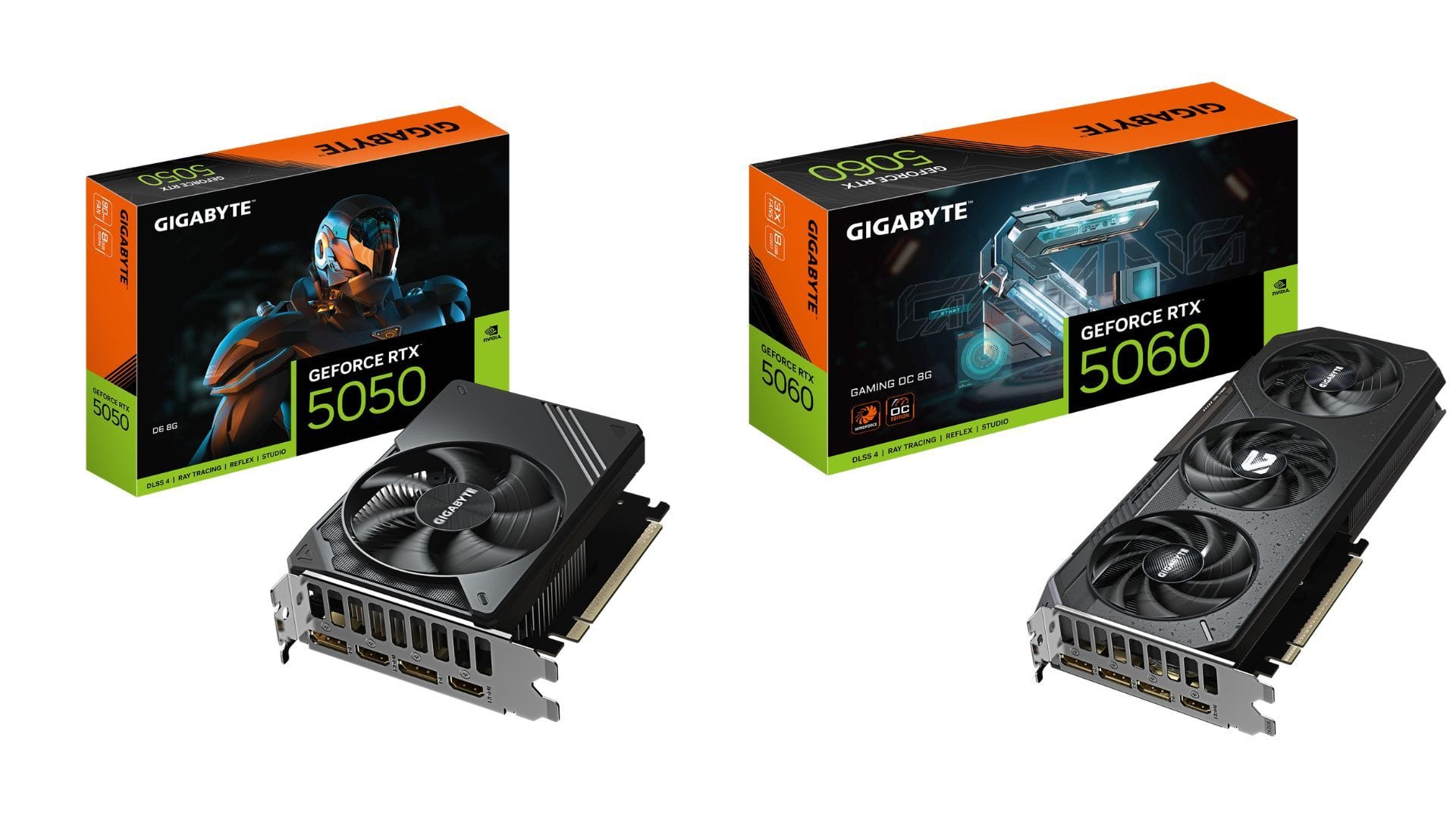
The Nvidia RTX 5050 and RTX 5060 are some of the latest entry-level gaming GPUs in the market. They are designed for 1080p gaming performance, although the two target slightly different audiences: while the 5050's focus is on budget-conscious gamers that want the bare minimum, the 5060 is decked with latest features like GDDR7 memory to offer slightly better performance.
Which gaming GPU should you buy in late 2025? Let's dissect the specs, performance, and value propositions to answer this.
The Nvidia RTX 5050 and RTX 5060 both target the entry-level gaming market
Both the RTX 5050 and RTX 5060 are based on the latest Blackwell architecture. This means tighter coupling of internal hardware for better upscaling performance. You get access to DLSS 4 with multi-frame generation support on both. However, the latest Transformer-based upscaling models and 3x/4x MFG presets can be quite heavy, leaving you with an overall stuttery experience despite the high average FPS numbers.
 Trending
Coming to the hardware end of things, the 5060 pairs 50% more CUDA cores, faster GDDR7 memory, and 40% larger memory bandwidth. This theoretically makes it 40% faster in theoretical compute (13.2 TFLOPS vs 19.2 TFLOPS). Both cards draw less than 150W power, making them interesting options for entry-level PCs:
Both GPUs can be bought for under $300 these days. While the 5050 is maintaining its launch MSRP of $249, the 5060 has hit $280 in the Black Friday sale. Top-end models with triple fans are selling for $330.
Read more: Intel Arc B580 vs Nvidia RTX 5050: Which is better for 1080p gaming?
Performance comparison
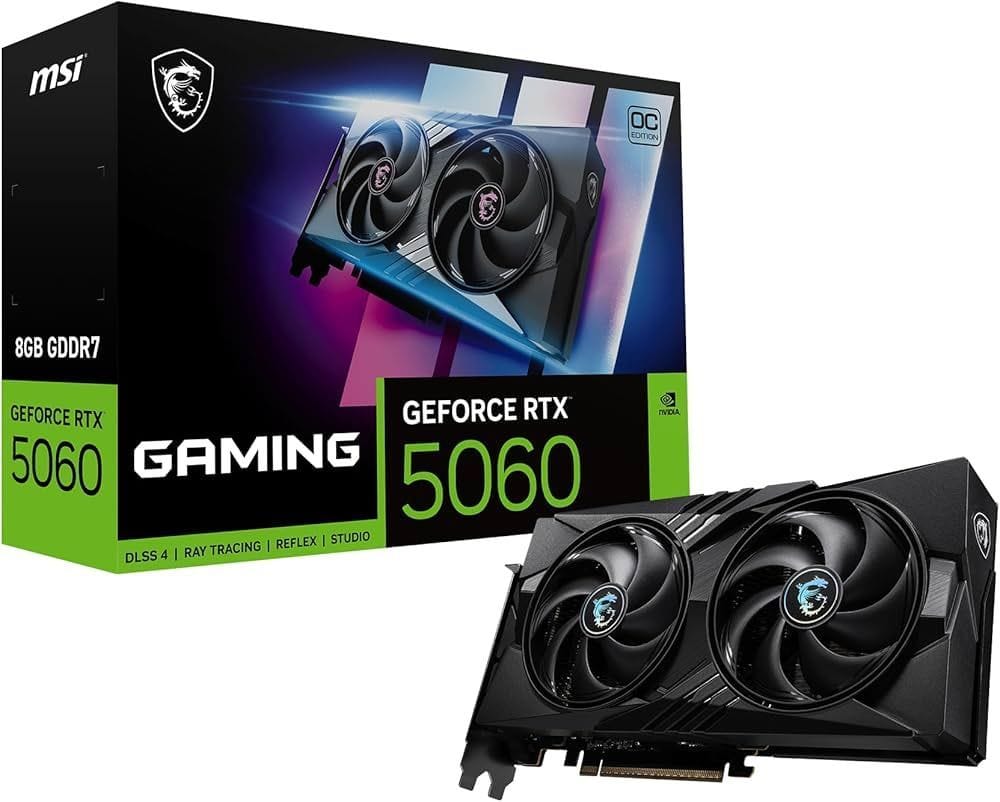
Here's how framerates in the latest video games differ between the two graphics cards at 1080p resolutions. The GPUs were tested with the Ryzen 7 9800X3D to avoid any bottlenecks. We have sourced these numbers from the YouTube channel Testing Games.
The RTX 5050 scores 61 FPS on average at 1080p, which is impressive performance for a $250 card. However, the $30-50 costlier 5060 gets playable performance in Mafia The Old Country while the 50-class offering can't. In the next few months, more games could add to this list, which undermines the 5050's value proposition.
However, among the tested games, the 5050 gets 0.245 FPS per $, while the RTX 5060 is slightly better at 0.27 FPS per $. This tilts our opinion toward the 60-class card. While it's slightly costlier, the RTX 5060 gets you better framerates in all games, playable numbers in more demanding titles, and 10% better value for money. The 5050, despite the savings potential, isn't cheap enough to justify the performance issues.


