


'%20x='0'%20y='0'%20height='100%25'%20width='100%25'%20%0A%20%20%20%20%20%20%20%20%20%20xlink%3Ahref='data:image/jpg;base64,/9j/2wBDAAYEBQYFBAYGBQYHBwYIChAKCgkJChQODwwQFxQYGBcUFhYaHSUfGhsjHBYWICwgIyYnKSopGR8tMC0oMCUoKSj/2wBDAQcHBwoIChMKChMoGhYaKCgoKCgoKCgoKCgoKCgoKCgoKCgoKCgoKCgoKCgoKCgoKCgoKCgoKCgoKCgoKCgoKCj/wgARCAAGAAoDASIAAhEBAxEB/8QAFQABAQAAAAAAAAAAAAAAAAAAAAX/xAAVAQEBAAAAAAAAAAAAAAAAAAACA//aAAwDAQACEAMQAAAAtQw0/8QAHxAAAgICAQUAAAAAAAAAAAAAAQIDBAURAAYHEnHS/9oACAEBAAE/AMt1amZz92tOLBrVkM8aNrSLGh8/ZbkXeWikaJJRsM6jTERj75//xAAXEQEAAwAAAAAAAAAAAAAAAAABAAID/9oACAECAQE/AMbqT//EABcRAQADAAAAAAAAAAAAAAAAAAEAAgP/2gAIAQMBAT8A1qE//9k='%3E%3C/image%3E%3C/svg%3E)

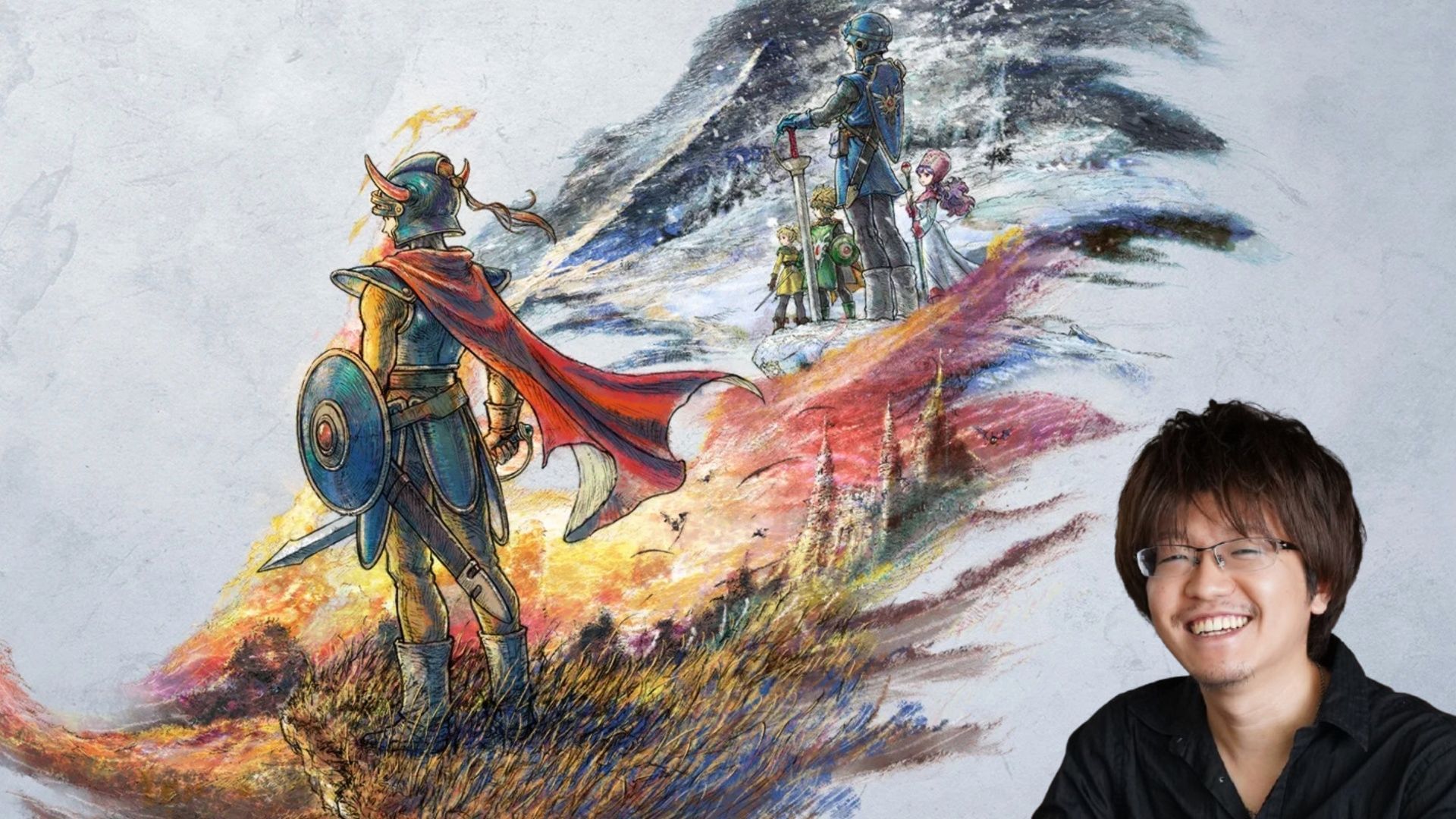
I recently spoke to Masaaki Hayasaka of Dragon Quest I & II HD-2D Remake fame, shortly after the game's launch, to discuss its success, changes, and the trilogy's reception. I interviewed him previously after the launch of Dragon Quest III HD-2D Remake, as it’s one of my all-time favorite games, and he was thankfully willing to speak with me again. We corresponded over email, and now I can finally reveal what the developer had to say about this iconic trilogy of games.
It’s clear that Masaaki Hayasaka has a reverence and respect for this trilogy, and I can only imagine how interesting it was to work alongside Yuji Horii, who is responsible for bringing Dragon Quest to life in the first place.
Masaaki Hayasaka opens up about Dragon Quest I & II HD-2D Remake, new story content, and more
Q. First of all, it’s a pleasure to chat with you again! The last time we spoke was about Dragon Quest 3 HD-2D Remake, so it’s great to talk again about my first RPG, Dragon Quest! As DQ I & II HD-2D Remake launches globally, I want to look back: What was the reception like for DQ III HD-2D Remake?
 Trending
Looking for Crossword hints & solutions? Check out latest NYT Mini Crossword Answers, LA Times Crossword Answers, and Atlantic Crossword Answers

Masaaki Hayasaka: I’m also honored to be interviewed again! I’m truly grateful so many people played Dragon Quest III HD-2D Remake. It really brought home just how much of a legendary title the original game was, and I could really feel how eagerly people were anticipating its remake.
Q. One of the greatest things about this remake trilogy is that it really adds a lot, lorewise, to these games. In particular, giving Hargon motivations for his wicked deeds, instead of just “being evil for the sake of evil”. When creating these games, did Yuji Horii have any input on the story? As he was the original story writer for DQII, I am curious to know if he always planned Hargon’s story arc the way it was designed here.
Masaaki Hayasaka: Yes, he was definitely involved. All newly added scenarios were developed after they were proposed to and reviewed by Yuji Horii. However, these weren’t necessarily ideas that Yuji Horii had envisioned since the original game, but rather suggestions that we, the development team, made for this remake by asking, “How do you feel about adding scenarios like these?”
Because we decided early on that this remake would be released in the order of III→I→II, we were already in discussion with Yuji Horii by then about these new scenarios centered around Hargon.
Q. While Dragon Quest I & II are both iconic games, they come from an era where RPGs were still pretty simplistic in design, likely due to technological restraints. When fleshing out and adding to the story for these two games, what was the discussion like? What were the areas that you felt needed updates the most?

Masaaki Hayasaka: The very first thing we discussed was making “adjustments as a modern game.” We first discussed incorporating abilities, spells, and other game mechanics to be more in line with recent Dragon Quest titles. We also had discussions from a level design perspective, such as experimenting with field sizes and adding dungeons and towns to streamline progression routes.
Following those decisions, we began creating additional scenarios so that the content volume would meet the expectations of a modern game. Given this, I believe the two areas that needed the most adjustments were the level design and the scenario.
Q. On the topic of updates, another excellent part of these games was adding combat skills. These two games in particular were notoriously difficult, so having more tools in the kit, especially for Prince of Midenhall, was such a nice change. He still cannot cast magic, which felt like an important character design, but now he can actually do things in battle. However, he lacks badly in powerful AOE attacks (EG: Gigaslash). Was there a particular design reason (or lore reason) that the Prince lacks in that area?
Masaaki Hayasaka: Yes, it’s intentional that the Prince of Midenhall doesn’t have access to many AOE attacks. This is because he’s already an excellent physical attacker, so giving him further AOE capabilities would make him too powerful and risk overshadowing other characters.
The director’s intent was therefore to spread this AOE role across the remaining 3 characters, ensuring all 4 protagonists have an equal opportunity to shine. That said, if you play through until the end, I’m sure you’ll find that the Prince of Midenhall becomes so strong that you probably won’t even notice it anymore. So, I’d say we were able to strike a balance, haha.
Q. Speaking of new features, we also have Scrolls that let players learn particular Skills/Spells they otherwise wouldn’t learn. Having access to Ripple of Disruption, for example, was an incredible way to stop bosses from powering up. One thing I find terribly interesting, though, is that Prince of Midenhall can learn Puff Puff! I thought this was incredibly funny, but given what “Puff Puff” means colloquially, why give Prince this (admittedly very useful) power?
Masaaki Hayasaka: With scrolls, we had a strong desire to allow players to enjoy choosing “which ability their characters should learn.” Puff-Puff, as a vocation ability, could be learned regardless of gender, even in past games, so we paid homage to that by offering a choice between either the Princess of Moonbrooke or the Prince of Midenhall to learn it. We knew it’d make people smile if they saw him – a power-type character and stoic protagonist – using Puff-Puff!
Q. Another part of Dragon Quest I & II HD-2D Remake that was really interesting was the Mermaid section of DQII. It adds more to the world, and, in a way, feels like it connects this trilogy more to Dragon Quest XI, given its rich, full mermaid storyline. Was that the intention, or was it more because Dragon Quest II teased mermaids, but didn’t really use them in any meaningful way?

Masaaki Hayasaka: Regarding how the seabed came to be—we initially built Dragon Quest II’s field size to be quite large back when we were still testing it, with the intention to increase the overall volume of the game. However, Yuji Horii then requested that we “make the overworld smaller, as it’s too vast and overwhelming,” but doing so would have made it difficult to secure enough content.
So, the idea to “create a seabed if the overworld wouldn’t work” emerged instead. Because the original game already featured ships and dungeons that relate to the seabed, we thought this idea would synthesize perfectly and thus adopted it. From there, we incorporated elements like mermaids and Lorelei’s Harp that evoke connections to other mainline titles to give proper meaning to this seabed. So, to answer your question, “Yes, that was certainly part of the intention as well.”
Q. One of the characters introduced in the Super Famicom version of Dragon Quest II (and Builders 2) made their way into this version of the game: Mariella. However, she has a much more expanded role in this version, as a major lieutenant under Hargon, and some other things I don’t want to spoil. What went into giving her a larger role in the Game?
Masaaki Hayasaka: Even though we wanted to strengthen the focus on him, Hargon in Dragon Quest II doesn’t appear front and center until basically the very end of the game, as he’s sequestered away to perform his summoning ritual the whole time. This made it difficult to drive the story with him at the center, so we needed an enemy who could fulfill that role in his place.
That’s when we set our sights on Mariella, a named character who also appears in the Hall of Hargon in the original game. While we could have created an entirely new enemy, it made much more sense to make use of her if a character like this already existed in the original; this was how her role came to be significantly elevated to a main-tier enemy in this latest remake.
Q. While I love Dragon Quest I & II HD-2D Remake, it definitely feels like there’s a pretty steep difficulty spike in some places. This isn’t a shock, because Dragon Quest as a series is pretty challenging. This is more prevalent in Dragon Quest I, I think, which features some very challenging bosses. Was this design style to try and teach players to use their skills and debuffs to get through, instead of simply just making them hard?

Masaaki Hayasaka: First of all, unlike other Dragon Quest titles (and indeed, other command-based JRPGs), Dragon Quest I is a solo journey from start to finish. This is a feature that makes the game quite unique, given that Dragon Quest I is the only title where you cannot win by employing the same battle tactics as other DRAGON QUEST games, something that could be said about the original game as well.
In other words, while it’s part of the same Dragon Quest series, it’s a game that features a fundamentally different battle design. While this remake does include some adjustments to make the difficulty somewhat in line with other Dragon Quest titles, we still didn’t want to lose the essence of Dragon Quest I, so we made balancing adjustments to ensure players could thoroughly experience this “challenge that’s quintessential for Dragon Quest I” from midgame onward. Because two completely different titles – Dragon Quest I & II – are included as a single package, we also wanted to deliver two distinct gaming experiences for each as well.
Q. Though I don’t want to spoil the final ending of Dragon Quest II, it’s truly a special moment, as a long-time Dragon Quest fan. What do you hope people take away from the ending, whether new or veteran players?
Masaaki Hayasaka: I don’t particularly have anything of that nature, as I believe how this ending is received changes depending on the person. There will be those who are moved, those who are confused, and those who speculate further; I think it’s an ending that elicits many different responses.
That said, I also believe this ending – one that “leaves room for the players to think” – is very on-brand for Dragon Quest. I find myself in awe knowing it was something Yuji Horii wrote himself.
Q. Though you weren’t in the group of fans that originally played this trilogy when it came out, you’ve spent a great deal of time with Dragon Quest I-III over the last few years. What do these games mean to you, now that the trilogy is complete, compared to when you first began?

Masaaki Hayasaka: Simply put, they’re “special.” After all, I grew up playing Dragon Quest, then got to work with Yuji Horii, its creator, on remaking the trilogy that began the series. As a game creator, it’s truly nothing short of an honor that so many people played and praised the game.
Although this was a profoundly challenging project, I also gained tremendous experience precisely because of it, learning so much from Yuji Horii and making countless reliable teammates along the way. Writing this now, I realize this project truly felt like embarking on a grand Dragon Quest adventure.
Q. Looking beyond these games, what’s next? If you could work on another remake of the classic games, where would you go next in the series?
Masaaki Hayasaka: I’m actually from the DRAGON QUEST VII generation in terms of the Dragon Quest series. I love it so much that I’ve beaten it about 4 or 5 times so far in my life, but now a remake of that very game is about to be released soon, haha.
Then there’s Dragon Quest Monsters: Terry’s Wonderland (released as DRAGON WARRIOR MONSTERS in North America), which is also right up my generation’s alley, so that might be it if I had to pick one. (Though, that game was remade for the 3DS too, so I suppose you could say it’s relatively recent as well, haha.)
Q. Do you have any final message for fans who have stuck it out, and are just getting started in Dragon Quest I & II HD-2D Remake?

Masaaki Hayasaka: These Erdrick Trilogy remakes were projects tasked with the mission of bringing more people to Dragon Quest, of course in Japan, but especially overseas. Some may be concerned about the content since it’s a remake of a game originally released nearly 40 years ago, but please rest assured!
Although the Dragon Quest series is full of masterpieces, we’re confident that this new Erdrick Trilogy is of a quality that could stand shoulder-to-shoulder with them. We hope existing Dragon Quest fans experience this new Erdrick legend that unfolds, while those who’ve never played Dragon Quest – one of Japan’s most iconic RPGs – take this opportunity to give it a try. Nothing would make us happier than for this remake to pave the path for even more people to fall in love with DRAGON QUEST. We hope you enjoy it!
Dragon Quest I & II HD-2D Remake and Dragon Quest III HD-2D Remake are all available right now on a wide assortment of platforms. An incredible trilogy of iconic games, I cannot recommend them highly enough, especially if you go in chronological order of DQIII, DQI, and DQII.

Are you stuck on today's Wordle? Our Wordle Solver will help you find the answer.


