


'%20x='0'%20y='0'%20height='100%25'%20width='100%25'%20%0A%20%20%20%20%20%20%20%20%20%20xlink%3Ahref='data:image/jpg;base64,/9j/2wBDAAYEBQYFBAYGBQYHBwYIChAKCgkJChQODwwQFxQYGBcUFhYaHSUfGhsjHBYWICwgIyYnKSopGR8tMC0oMCUoKSj/2wBDAQcHBwoIChMKChMoGhYaKCgoKCgoKCgoKCgoKCgoKCgoKCgoKCgoKCgoKCgoKCgoKCgoKCgoKCgoKCgoKCgoKCj/wgARCAAGAAoDASIAAhEBAxEB/8QAFgABAQEAAAAAAAAAAAAAAAAAAAEG/8QAFAEBAAAAAAAAAAAAAAAAAAAAA//aAAwDAQACEAMQAAAAyEFH/8QAHBAAAgICAwAAAAAAAAAAAAAAAhEAAQMSMUFR/9oACAEBAAE/AAOuRvIvNlGfRkp//8QAFxEBAAMAAAAAAAAAAAAAAAAAAQADEf/aAAgBAgEBPwCs0n//xAAWEQEBAQAAAAAAAAAAAAAAAAABAgD/2gAIAQMBAT8Aqk3/2Q=='%3E%3C/image%3E%3C/svg%3E)

Europa Universalis 5 aims to be an ambitious reflection of human civilization cross a wide range of timelines throughout human history, and this includes religions as well. Alongside culture, this is one of the most important aspects of a location and its populace, which can drastically alter gameplay in many ways. From major religions still practiced today to lesser-known indigenous folk practices, Europa Universalis 5 is packed with dozens of religions.
This guide lists all religions available in Europa Universalis 5. Read on to know more.
Also Read: 6 best beginner tips and tricks for Europa Universalis 5
Looking for Crossword hints & solutions? Check out latest NYT Mini Crossword Answers, LA Times Crossword Answers, and Atlantic Crossword Answers
Every religion in Europa Universalis 5 listed
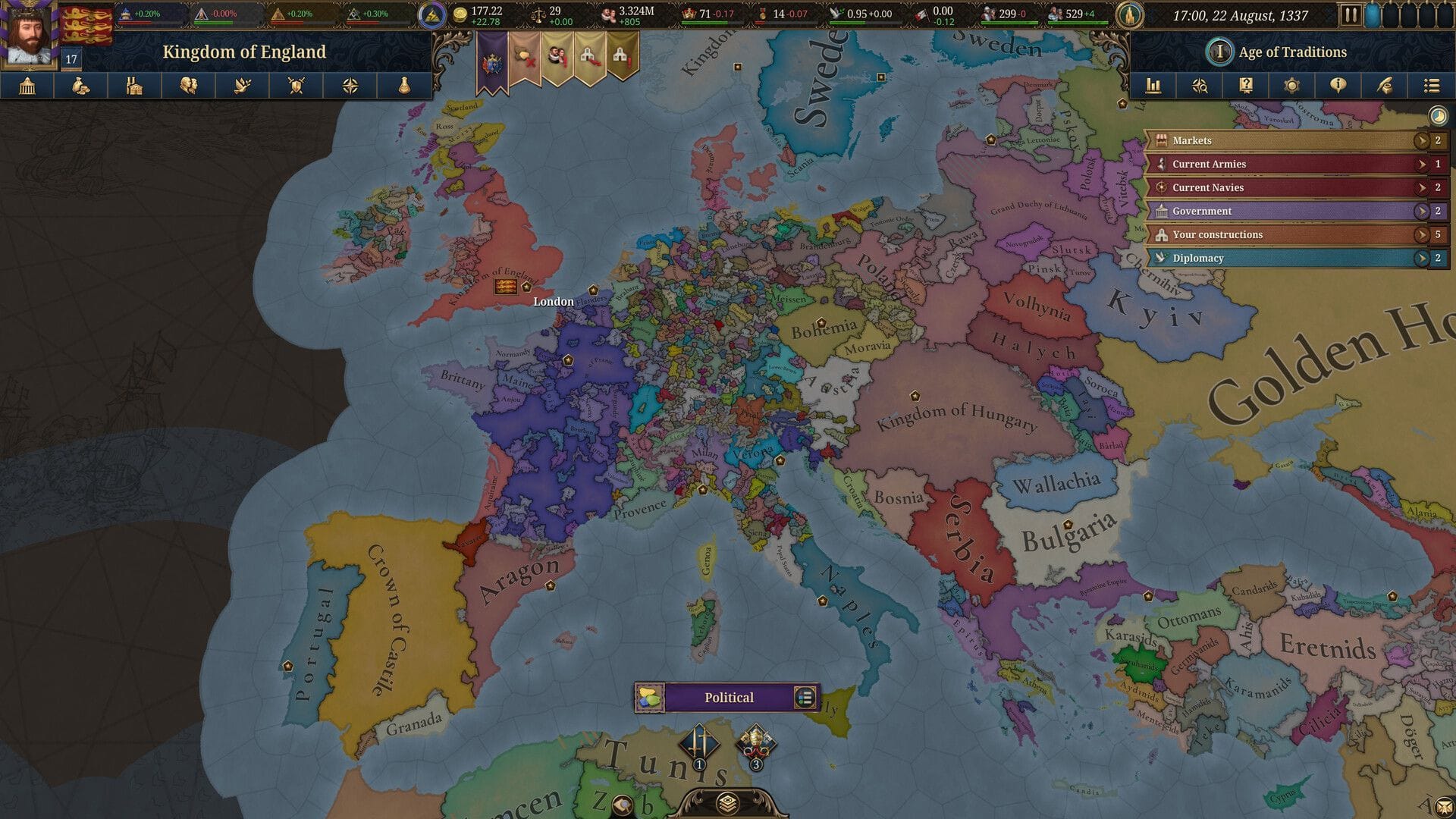
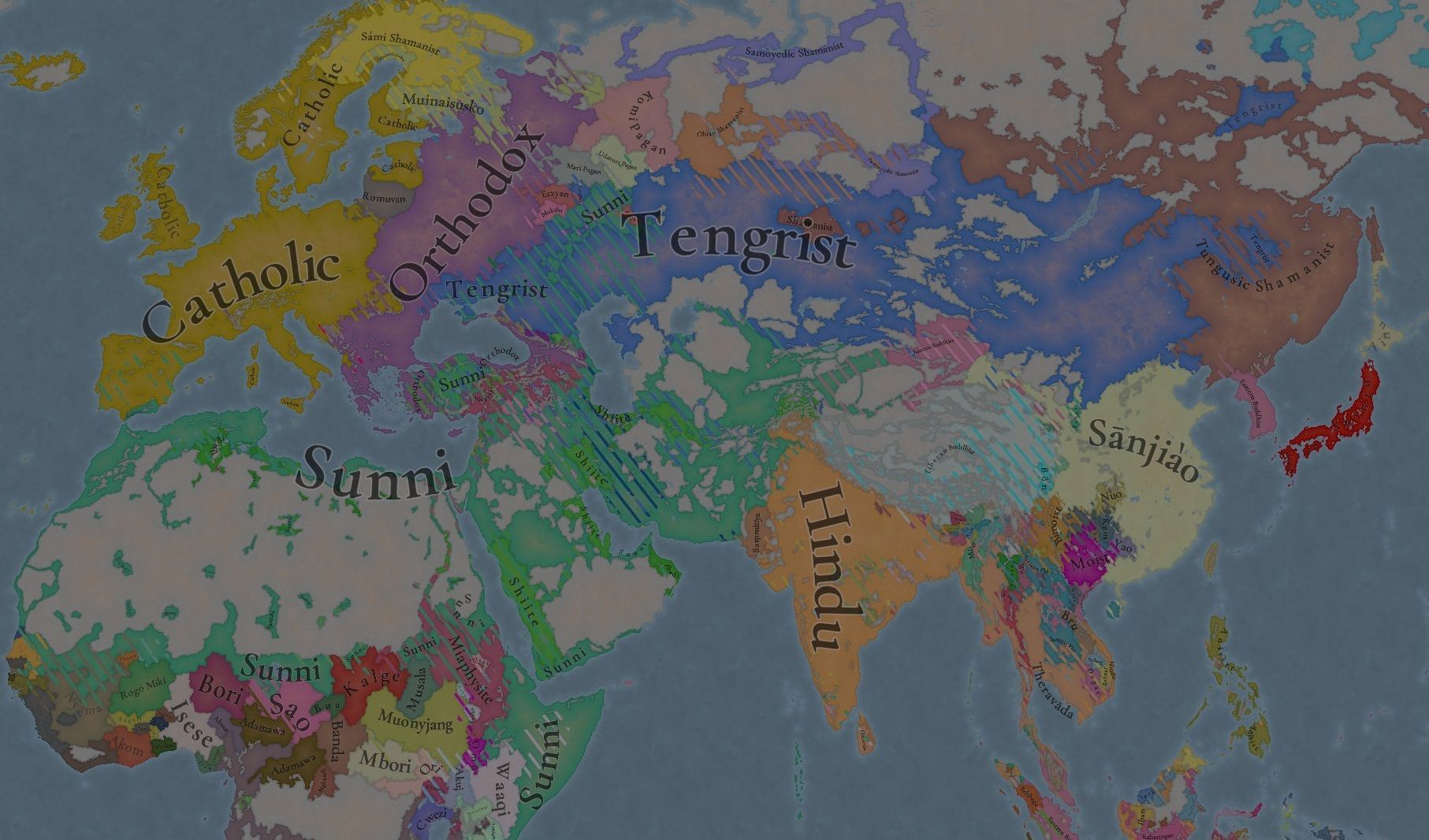
Europa Universalis 5 boasts a whopping 300 different religions to pick from, and each Pop in the game can have a culture, religion, and language. Satisfying their religious needs is one of the most important Pop mechanics in the game, else they may rebel against the nation. Religion in Europa Universalis 5 doesn't just influence the cultural flow of a region but also affects politics, relations with other countries, governance and much more.
 Trending
Buddhist Religions:
- Bön: Emerging from the religious traditions of Tibet before the arrival of Buddhism, it became very influenced by Tibetan Buddhism. It is especially close to the Nyingma School, but still preserves many pre-Buddhism elements. Its teachings focus on Karma and rebirth, and the ways of achieving enlightenment.
- Eastern Buddhism: Called the 'Great Vehicle', Mahāyāna is a branch of Buddhism that accepts not only the early Buddhist text, but also those known as the Mahāyāna Sūtra. It emphasizes the figure of the Bodhisattva, understanding the Bodhisattva path as available to all as a way to achieve Buddhahood. While originally developing in India, it saw much of its expansion through China and the Silk Road, and the Chinese Canon forms now the basis of all Eastern Buddhism.
- Saṃmitīya: One of the many branches of early Buddhism in India, Saṃmitīya developed in Sindh becoming a great center of early Buddhist schools even rivaling the Mahāyāna Nālandā. Being the biggest non-Mahāyāna Buddhism in India, it was removed from its place of prominence with the Muslim invasions.
- Sānjiào: Called the 'Three Teachings', it is the combined blend and influences of Confucianism, Daoism, and Buddhism. Being all three present in China for centuries, and also influencing and being influenced by many other Chinese folk beliefs and deities, they have not always been in harmony among each other, but they have always been part of the Chinese way of life.
- Shintō: The diverse set of beliefs and practices revolving around Kami worship that were present in Japan before the arrival of Buddhism got intrinsically tied to and blended with Buddhist practices and concepts as Buddhism spread through Japan. The Kami and Buddhist deities were identified with one another, with both sets of beliefs becoming functionally inseparable. This gave rise to a particularly Japanese flavor of Buddhism blended with a Buddhism-influenced Kami worship.
- Theravāda: Called 'School of the Elders', it adheres to the oldest traditions of Buddhism. It rejects the Mahāyāna Sūtra and thus the many Bodhisattva and the Bodhisattva path itself as being available to all. Instead, it focuses on the monastic community as the superior way of achieving enlightenment.
- Tibetan Buddhism: The form of Buddhism developed along and around the mountains of the Himalayas emerged from the Mahāyāna tradition, but incorporated many of the esoteric practices of Vajrayāna due to its close contact with India and the later stages of development of Buddhism there.
Christian Religions:
- Anglicanism: Anglicanism is a form of Christianity in which the head of state is also the Supreme Governor of the Church. Theologically and institutionally, Anglicanism retains many elements of Catholicism while also being influenced by Reformed Puritans and continental Lutheran beliefs.
- Bogomilism: A neo-gnostic and dualist branch of Christianity, Bogomilism teaches that existence is divided between a spiritual realm and a material one. Its followers view their bodies as sacred temples and strive for closeness to God through purification rituals. These practices include fasting, dancing, and rejecting material excess to focus on spiritual growth.
- Krstjani: A breakaway sect of the Catholic Church, the Krstjani developed its distinct theology due to prolonged isolation from mainstream Christianity. It focused heavily on apocalyptic themes, embraced mysticism, and retained many archaic practices of early Christianity. These traits led both Catholic and Orthodox authorities to denounce it as heretical.
- Calvinism: Named after John Calvin, Calvinism is a significant branch of Protestantism rooted in the principles of simplicity in worship and the supremacy of the Holy Bible. Its doctrine emphasizes predestination, asserting that God has preordained the destiny of all creation.
- Catharism: Catharism is a dualist movement that believes in the existence of two Gods: a benevolent God of Heaven and a malevolent counterpart. Its adherents follow an ascetic lifestyle, holding that souls are trapped in physical bodies as part of a cosmic struggle. Spiritual purification, achieved through strict discipline, is seen as the only path to salvation.
- Catholicism: Rooted in the Nicene Creed, Catholicism is the largest denomination of Christianity and is led by the Pope, who serves as the spiritual successor to Saint Peter. The Pope acts as both the head of the Church and a mediator in conflicts among Christian rulers. Its doctrine and traditions have shaped much of the Western world's religious and cultural history.
- Hussitism: Founded by Jan Hus, the Hussite Church emerged as a proto-Protestant movement in Bohemia, blending elements of the Byzantine Rite with the teachings of John Wycliffe. It emphasized communion under both kinds and the importance of scripture over Church tradition.
- Lollardy: Led by John Wycliffe, Lollardy was a reformist movement advocating for universal priesthood and rejecting the necessity of sacraments like baptism and confession for salvation. Its teachings emphasized direct access to God through scripture, which was translated into vernacular languages. This made its theology accessible to the common people and fueled early calls for Church reform.
- Lutheranism: Based on Martin Luther's Ninety-five Theses, Lutheranism began as a call to reform the Catholic Church but evolved into a distinct Protestant denomination. It teaches that the Old and New Testament scriptures are the sole infallible authority for Christian doctrine.
- Miaphysitism: Miaphysitism teaches that in the person of Christ, His divine and human natures are united into a single, indivisible nature. This doctrine, rooted in the Council of Ephesus, spread widely across regions like Armenia, Egypt, and Ethiopia. Miaphysite communities have preserved their unique liturgies and traditions, emphasizing Christ's unity as both God and man.
- Nestorianism: Nestorianism, named after Nestorius, teaches that Christ's divine and human natures are distinct and exist side by side. This doctrine was rejected by the Council of Ephesus but found a strong following in Persia and beyond. Nestorian Christians spread their faith across Asia, becoming the largest Christian religion in land area covered.
- Orthodoxy: The Orthodox Church, rooted in the traditions of the early Christian councils, emphasizes the continuity of apostolic teachings and sacred tradition. Centered on the Byzantine Rite, it places great importance on liturgy, icons, and mysticism. The Orthodox faith is led by patriarchs, with the Ecumenical Patriarch of Constantinople holding a primacy of honor.
- Paulicianism: Paulicianism is a dualist Christian sect that rejects the material world as the creation of an evil force. Its followers hold that only the spiritual realm is pure and base their beliefs on the New Testament, rejecting the Old Testament entirely. Persecuted by both Catholic and Orthodox authorities, the Paulician movement resisted assimilation and inspired later reformist movements.
- Strigolnichestvo: Emerging in medieval Russia, the Strigolnichestvo is a reformist sect critical of the established Orthodox Church. They condemn the corruption of priests, the selling of sacraments, and the accumulation of wealth by clergy. Favoring a simpler faith focused on personal piety, the Strigolniki are a target by the Orthodox Church and state authorities.
- Waldensian: Founded by Peter Waldo, the Waldensian is a reformist Christian movement emphasizing simplicity, poverty, and the authority of scripture. They reject clerical wealth, the veneration of saints, and the necessity of sacraments for salvation. Persecuted as heretics, the Waldensian movement have endured centuries of oppression while spreading their message across Europe.
Dharmic Religions:
- Hinduism: A collection of different beliefs rather than a unified religion, Hinduism is often considered the oldest religious tradition in the world. All its beliefs and practices understood as explanations of the Dharma, the cosmic order, it stems from the ancient Vedic literature. Being so varied, it also contains a multitude of gods, although not all of them are equally venerated or even recognized by all Hindu practitioners, depending on their particular beliefs and orientations. The four main branches of Hinduism are Vaishnavism, Shaktism, Shaivism, and Smartism.
- Jainism: One of the oldest religions, Jainism is an Indian Dharmic religion focusing on attempting self-realization and liberation from the cycle of death and rebirth. It centers in non-violence and asceticism through the teachings of the Tīrthaṅkara, the supreme preachers of the Dharma, and it is divided in the Digambara and Śvetāmbara schools. Digambara, meaning 'sky-clad', is characterized by its rejection to attachment and possession of material goods, and thus its monks do not wear any clothes, and its iconography is more plain. Śvetāmbara, on the other hand, means 'white-clad' due to the white clothes of its monks, and has more equality between male and female monks, in opposition to the more male-oriented Digambara.
- Sikhism: A religion founded by the teachings of the Guru, it originates from the varied Hindu faiths of India, and incorporates many influences from Islam. It believes in one creator, Ik Onkar, and to conduct oneself honestly and selflessly for the benefit of all. It encourages connection with the divine through the use of contemplation and meditation, as well as recitation and music as ways to be conscious of God's presence.
Druze Religions:
- Druzism: Although emerging from Ismā'īlī, Druze people do not consider themselves Muslim. Besides its obvious influence from Islam, it also gets influence from other Abrahamic and non-Abrahamic religions, giving rise to a distinct faith with emphasis on esotericism and the Cosmic Mind which all souls reunite to after many reincarnations.
Israelite Religions:
- Judaism: The original Abrahamic faith, Judaism adheres to the covenant made between God and Moses. The Jewish Bible is the Tānāḵ, of which the first five books are known as the Tōrā, serving as the basis of all Jewish faith and practice.
- Samaritanism: The traditional faith of the Samaritan, it emerged from Judaism after the fall of the Kingdom of Israel. Samaritanism considers itself to be the unchanged faith of the Israelite people from the times of Moses, in contrast to what they believe is a corruption of the scriptures by Judaism
Mandean Religions:
- Mandeaism: A gnostic religion considering John the Baptist to be the final prophet, Mandeaism also includes Greek and Iranian influences. Although it considers as such some prophets of other Abrahamic religions, it does not consider Abraham, Moses, or Jesus to be Mandean prophets. The God of Mandeaism is called Hiia Rbia, meaning 'Great Life', and it represents the creative force of the universe.
Manichaean Religions:
- Manichaeism: Manichaeism is an Iranian religion founded by the prophet Mani in the Sasanian Empire. It has influences by many other religions, including Gnosticism, Zoroastrianism, Christianity, and Buddhism among others, but considers Mani to be the final prophet after Zoroaster, Buddha, and Jesus. Its theology is dualistic, describing the universe as a spiritual struggle between light and darkness.
Muslim Religions:
- Ibadism: Believed to be a descendant of the Al-Khawārij, who first were supporters of 'Alī ibn Abī Ṭālib but later rejected his arbitration. The Ibāḍī school distanced itself from the Al-Khawārij following 'Abd Allāh ibn Ibāḍ, taking a more moderate approach and a more positive view towards different Muslim branches, having similarities with many of the other schools.
- Shiism: The basis of the Shiite faith is that Muḥammad designated 'Alī ibn Abī Ṭālib as his successor as the spiritual and political leader of Islam. As such, the Imamate is to follow 'Alī's line rather than the one established by 'Abū Bakr when he was chosen as Ḵalīfa at the meeting of Saqīfah by the companions of Muḥammad.
- Sunnism: Sunnism holds that the leadership of Islam was passed to 'Abū Bakr when he was chosen as Ḵalīfa at the meeting of Saqīfah by the companions of Muḥammad, as the Prophet himself did not appoint any successor. It thus reveres the al-Rāshidūn, the first four Ḵalīfa after Muḥammad, as a model of governance.
Tonal Religions:
- Chīchīmēcah: The Chīchīmēcah religion refers to the indigenous beliefs, mythology, traditions, and practices maintained and transmitted by its followers since the beginning of time.
- Maya: The Maya religion refers to the indigenous beliefs, mythology, traditions, and practices maintained and transmitted by its followers since the beginning of time.
- Tonal: The Tonal religion refers to the indigenous beliefs, mythology, traditions, and practices maintained and transmitted by its followers since the beginning of time.
- Nahua: The religion of the Nahua, in which the many Teōtl or gods are organized under the supreme god Ōmeteōtl. Many other gods, like Huītzilōpōchtli, Tláloc, or Quetzalcōātl are commonly adopted as patron of estates or peoples. One of its key practices is that of human sacrifice, performed in honor of the gods and a necessity to keep their favor.
Yazidi Religions:
- Yazidism: Emerging from an Iranian tradition, it also contains elements from Judaism, Christianity, and Islam. It believes that the universe was created by God but that he appointed the 'Peacock Angel' Tawûsî Melek to rule over it. Although it contains many influences by other religions, especially in its esoteric practices, its core is rooted in the ancient Iranian religions.
Zoroastrian Religions:
- Zoroastrianism: An ancient Iranian religion following the teachings of Zoroaster, also called Zarathustra, and the texts of the Avesta. It is based on a dualistic cosmology of good and evil, with the eternal conflict of the deity Ahura Mazdā and the destructive spirit Angra Mainyu, with a predicted ultimate triumph of good over evil.
African Folk Religions:
- a ƭat Roog: The a ƭat Roog religion refers to the indigenous beliefs, mythology, traditions, and practices maintained and transmitted by its followers since the beginning of time.
- Abwoi: The Abwoi religion refers to the indigenous beliefs, mythology, traditions, and practices maintained and transmitted by its followers since the beginning of time.
- Adamawa: The Adamawa religion refers to the indigenous beliefs, mythology, traditions, and practices maintained and transmitted by its followers since the beginning of time.
- Ajok: The Ajok religion refers to the indigenous beliefs, mythology, traditions, and practices maintained and transmitted by its followers since the beginning of time.
- Akom: The Akom religion refers to the indigenous beliefs, mythology, traditions, and practices maintained and transmitted by its followers since the beginning of time.
- Akuj: The Akuj religion refers to the indigenous beliefs, mythology, traditions, and practices maintained and transmitted by its followers since the beginning of time.
- Anna: The Anna religion refers to the indigenous beliefs, mythology, traditions, and practices maintained and transmitted by its followers since the beginning of time.
- Asis: The Asis religion refers to the indigenous beliefs, mythology, traditions, and practices maintained and transmitted by its followers since the beginning of time.
- Badimo The Badimo religion refers to the indigenous beliefs, mythology, traditions, and practices maintained and transmitted by its followers since the beginning of time.
- Banda: The Banda religion refers to the indigenous beliefs, mythology, traditions, and practices maintained and transmitted by its followers since the beginning of time.
- Bantu: The Bantu religion refers to the indigenous beliefs, mythology, traditions, and practices maintained and transmitted by its followers since the beginning of time.
- Bori: The Bori religion refers to the indigenous beliefs, mythology, traditions, and practices maintained and transmitted by its followers since the beginning of time.
- Bua: The Bua religion refers to the indigenous beliefs, mythology, traditions, and practices maintained and transmitted by its followers since the beginning of time.
- Bughli: The Bughli religion refers to the indigenous beliefs, mythology, traditions, and practices maintained and transmitted by its followers since the beginning of time.
- Cwezi: The Cwezi religion refers to the indigenous beliefs, mythology, traditions, and practices maintained and transmitted by its followers since the beginning of time.
- Dogon: The Dogon religion refers to the indigenous beliefs, mythology, traditions, and practices maintained and transmitted by its followers since the beginning of time.
- Ebore: The Ebore religion refers to the indigenous beliefs, mythology, traditions, and practices maintained and transmitted by its followers since the beginning of time.
- Emit: The Emit religion refers to the indigenous beliefs, mythology, traditions, and practices maintained and transmitted by its followers since the beginning of time.
- Eso: The Eso religion refers to the indigenous beliefs, mythology, traditions, and practices maintained and transmitted by its followers since the beginning of time.
- Mebege: The Mebege religion refers to the indigenous beliefs, mythology, traditions, and practices maintained and transmitted by its followers since the beginning of time.
- Fomba Gasy: The Fomba Gasy religion refers to the indigenous beliefs, mythology, traditions, and practices maintained and transmitted by its followers since the beginning of time.
- Geno: The Geno religion refers to the indigenous beliefs, mythology, traditions, and practices maintained and transmitted by its followers since the beginning of time.
- Godala: The Godala religion refers to the indigenous beliefs, mythology, traditions, and practices maintained and transmitted by its followers since the beginning of time.
- Guanche: The Guanche religion refers to the indigenous beliefs, mythology, traditions, and practices maintained and transmitted by its followers since the beginning of time.
- Ijaw: The Ijaw religion refers to the indigenous beliefs, mythology, traditions, and practices maintained and transmitted by its followers since the beginning of time.
- Isese: The Isese religion refers to the indigenous beliefs, mythology, traditions, and practices maintained and transmitted by its followers since the beginning of time.
- Kaggen: The Kaggen religion refers to the indigenous beliefs, mythology, traditions, and practices maintained and transmitted by its followers since the beginning of time.
- Kalge: The Kalge religion refers to the indigenous beliefs, mythology, traditions, and practices maintained and transmitted by its followers since the beginning of time.
- Karama: The Karama religion refers to the indigenous beliefs, mythology, traditions, and practices maintained and transmitted by its followers since the beginning of time
- Kuru Masaba: The Kuru Masaba religion refers to the indigenous beliefs, mythology, traditions, and practices maintained and transmitted by its followers since the beginning of time.
- Adroa-Adro: The Adroa-Adro religion refers to the indigenous beliefs, mythology, traditions, and practices maintained and transmitted by its followers since the beginning of time.
- Mwene Nyaga: The Mwene Nyaga religion refers to the indigenous beliefs, mythology, traditions, and practices maintained and transmitted by its followers since the beginning of time.
- Mbori: The Mbori religion refers to the indigenous beliefs, mythology, traditions, and practices maintained and transmitted by its followers since the beginning of time.
- Muonyjang: The Muonyjang religion refers to the indigenous beliefs, mythology, traditions, and practices maintained and transmitted by its followers since the beginning of time.
- Musala: The Musala religion refers to the indigenous beliefs, mythology, traditions, and practices maintained and transmitted by its followers since the beginning of time.
- Naa-wuni: The Naa-wuni religion refers to the indigenous beliefs, mythology, traditions, and practices maintained and transmitted by its followers since the beginning of time
- Ngbandi: The Ngbandi religion refers to the indigenous beliefs, mythology, traditions, and practices maintained and transmitted by its followers since the beginning of time.
- N'haala: The N'haala religion refers to the indigenous beliefs, mythology, traditions, and practices maintained and transmitted by its followers since the beginning of time.
- Nyama: The Nyama religion refers to the indigenous beliefs, mythology, traditions, and practices maintained and transmitted by its followers since the beginning of time
- Nyasaye: The Nyasaye religion refers to the indigenous beliefs, mythology, traditions, and practices maintained and transmitted by its followers since the beginning of time.
- Nyesoa: The Nyesoa religion refers to the indigenous beliefs, mythology, traditions, and practices maintained and transmitted by its followers since the beginning of time.
- Odinala: The Odinala religion refers to the indigenous beliefs, mythology, traditions, and practices maintained and transmitted by its followers since the beginning of time.
- Omo: The Omo religion refers to the indigenous beliefs, mythology, traditions, and practices maintained and transmitted by its followers since the beginning of time.
- Ori: The Ori religion refers to the indigenous beliefs, mythology, traditions, and practices maintained and transmitted by its followers since the beginning of time.
- Rebba: The Rebba religion refers to the indigenous beliefs, mythology, traditions, and practices maintained and transmitted by its followers since the beginning of time.
- Rogo Miki: The Rogo Miki religion refers to the indigenous beliefs, mythology, traditions, and practices maintained and transmitted by its followers since the beginning of time.
- Sao: The Sao religion refers to the indigenous beliefs, mythology, traditions, and practices maintained and transmitted by its followers since the beginning of time.
- Songhai: The Songhai religion refers to the indigenous beliefs, mythology, traditions, and practices maintained and transmitted by its followers since the beginning of time.
- Vodun: The Vodun religion refers to the indigenous beliefs, mythology, traditions, and practices maintained and transmitted by its followers since the beginning of time.
- Waaqeffanna: The Waaqeffanna religion refers to the indigenous beliefs, mythology, traditions, and practices maintained and transmitted by its followers since the beginning of time.
Andean Folk Religions:
- Arútam: The Arútam religion refers to the indigenous beliefs, mythology, traditions, and practices maintained and transmitted by its followers since the beginning of time.
- Cebil: The Cebil religion refers to the indigenous beliefs, mythology, traditions, and practices maintained and transmitted by its followers since the beginning of time.
- Chango: The Chango religion refers to the indigenous beliefs, mythology, traditions, and practices maintained and transmitted by its followers since the beginning of time.
- Chanka: The Chanka religion refers to the indigenous beliefs, mythology, traditions, and practices maintained and transmitted by its followers since the beginning of time.
- Chincha: The Chincha religion refers to the indigenous beliefs, mythology, traditions, and practices maintained and transmitted by its followers since the beginning of time.
- Gos: The Gos religion refers to the indigenous beliefs, mythology, traditions, and practices maintained and transmitted by its followers since the beginning of time.
- Inti: Inti, together with Wiraqucha, are the main gods that guide and protect the people of the Andes.
- Jama: The Jama religion refers to the indigenous beliefs, mythology, traditions, and practices maintained and transmitted by its followers since the beginning of time.
- Naylamp: The Naylamp religion refers to the indigenous beliefs, mythology, traditions, and practices maintained and transmitted by its followers since the beginning of time.
- Pává: The Pává religion refers to the indigenous beliefs, mythology, traditions, and practices maintained and transmitted by its followers since the beginning of time.
- Pi: The Pi religion refers to the indigenous beliefs, mythology, traditions, and practices maintained and transmitted by its followers since the beginning of time.
- Umiña: The Umiña religion refers to the indigenous beliefs, mythology, traditions, and practices maintained and transmitted by its followers since the beginning of time.
- Yastay: The Yastay religion refers to the indigenous beliefs, mythology, traditions, and practices maintained and transmitted by its followers since the beginning of time.
Argentinian Folk Religions:
- Kénos: The Kénos religion refers to the indigenous beliefs, mythology, traditions, and practices maintained and transmitted by its followers since the beginning of time.
- Kilyikhama: The Kilyikhama religion refers to the indigenous beliefs, mythology, traditions, and practices maintained and transmitted by its followers since the beginning of time.
- Mororuma: The Mororuma religion refers to the indigenous beliefs, mythology, traditions, and practices maintained and transmitted by its followers since the beginning of time.
- Pabichu: The Pabichu religion refers to the indigenous beliefs, mythology, traditions, and practices maintained and transmitted by its followers since the beginning of time.
- Taiñ Feyentún: The Taiñ Feyentún religion refers to the indigenous beliefs, mythology, traditions, and practices maintained and transmitted by its followers since the beginning of time.
- Tokuah: The Tokuah religion refers to the indigenous beliefs, mythology, traditions, and practices maintained and transmitted by its followers since the beginning of time.
Aridoamerican Folk Religions:
- Atakapa: The Atakapa religion refers to the indigenous beliefs, mythology, traditions, and practices maintained and transmitted by its followers since the beginning of time.
- Cáhita: The Cáhita religion refers to the indigenous beliefs, mythology, traditions, and practices maintained and transmitted by its followers since the beginning of time.
- Coahuilteco: The Coahuilteco religion refers to the indigenous beliefs, mythology, traditions, and practices maintained and transmitted by its followers since the beginning of time.
- Guasave: The Guasave religion refers to the indigenous beliefs, mythology, traditions, and practices maintained and transmitted by its followers since the beginning of time.
- Irritila: The Irritila religion refers to the indigenous beliefs, mythology, traditions, and practices maintained and transmitted by its followers since the beginning of time.
- Kachina: The Kachina religion refers to the indigenous beliefs, mythology, traditions, and practices maintained and transmitted by its followers since the beginning of time.
- Karankawa: The Karankawa religion refers to the indigenous beliefs, mythology, traditions, and practices maintained and transmitted by its followers since the beginning of time.
- Niparaya: The Niparaya religion refers to the indigenous beliefs, mythology, traditions, and practices maintained and transmitted by its followers since the beginning of time.
- Comcaac: The Comcaac religion refers to the indigenous beliefs, mythology, traditions, and practices maintained and transmitted by its followers since the beginning of time.
- Ódami: The Ódami religion refers to the indigenous beliefs, mythology, traditions, and practices maintained and transmitted by its followers since the beginning of time.
- Yuman: The Yuman religion refers to the indigenous beliefs, mythology, traditions, and practices maintained and transmitted by its followers since the beginning of time.
Asian Folk Religions:
- Ainu: The Ainu religion refers to the indigenous beliefs, mythology, traditions, and practices maintained and transmitted by its followers since the beginning of time.
- Andamanese: The Andamanese religion refers to the indigenous beliefs, mythology, traditions, and practices maintained and transmitted by its followers since the beginning of time.
- Bahnar: The Bahnar religion refers to the indigenous beliefs, mythology, traditions, and practices maintained and transmitted by its followers since the beginning of time.
- Bathouism: The Bathouism religion refers to the indigenous beliefs, mythology, traditions, and practices maintained and transmitted by its followers since the beginning of time.
- Bimoism: The Bimoism religion refers to the indigenous beliefs, mythology, traditions, and practices maintained and transmitted by its followers since the beginning of time.
- Blang: The Blang religion refers to the indigenous beliefs, mythology, traditions, and practices maintained and transmitted by its followers since the beginning of time.
- Bru: The Bru religion refers to the indigenous beliefs, mythology, traditions, and practices maintained and transmitted by its followers since the beginning of time.
- Chukchee Shamanism: The Chukchee Shamanism religion refers to the indigenous beliefs, mythology, traditions, and practices maintained and transmitted by its followers since the beginning of time.
- Chutia: The Chutia religion refers to the indigenous beliefs, mythology, traditions, and practices maintained and transmitted by its followers since the beginning of time.
- Dimasa: The Dimasa religion refers to the indigenous beliefs, mythology, traditions, and practices maintained and transmitted by its followers since the beginning of time.
- Dongbaism: The Dongbaism religion refers to the indigenous beliefs, mythology, traditions, and practices maintained and transmitted by its followers since the beginning of time.
- Donyi Polo: The Donyi Polo religion refers to the indigenous beliefs, mythology, traditions, and practices maintained and transmitted by its followers since the beginning of time.
- Formosan: The Formosan religion refers to the indigenous beliefs, mythology, traditions, and practices maintained and transmitted by its followers since the beginning of time.
- Gosain: The Gosain religion refers to the indigenous beliefs, mythology, traditions, and practices maintained and transmitted by its followers since the beginning of time.
- Hani: The Hani religion refers to the indigenous beliefs, mythology, traditions, and practices maintained and transmitted by its followers since the beginning of time.
- Kev Dab Qhuas: The Kev Dab Qhuas religion refers to the indigenous beliefs, mythology, traditions, and practices maintained and transmitted by its followers since the beginning of time.
- Jingpo: The Jingpo religion refers to the indigenous beliefs, mythology, traditions, and practices maintained and transmitted by its followers since the beginning of time.
- Jino: The Jino religion refers to the indigenous beliefs, mythology, traditions, and practices maintained and transmitted by its followers since the beginning of time.
- Juang: The Juang religion refers to the indigenous beliefs, mythology, traditions, and practices maintained and transmitted by its followers since the beginning of time.
- Ka Niam Khasi: The Ka Niam Khasi religion refers to the indigenous beliefs, mythology, traditions, and practices maintained and transmitted by its followers since the beginning of time.
- Kam: The Kam religion refers to the indigenous beliefs, mythology, traditions, and practices maintained and transmitted by its followers since the beginning of time.
- Karbi: The Karbi religion refers to the indigenous beliefs, mythology, traditions, and practices maintained and transmitted by its followers since the beginning of time.
- Karen: The Karen religion refers to the indigenous beliefs, mythology, traditions, and practices maintained and transmitted by its followers since the beginning of time.
- Kharia: The Kharia religion refers to the indigenous beliefs, mythology, traditions, and practices maintained and transmitted by its followers since the beginning of time.
- Khond: The Khond religion refers to the indigenous beliefs, mythology, traditions, and practices maintained and transmitted by its followers since the beginning of time.
- Kirat Mundhum: The Kirat Mundhum religion refers to the indigenous beliefs, mythology, traditions, and practices maintained and transmitted by its followers since the beginning of time.
- Koch: The Koch religion refers to the indigenous beliefs, mythology, traditions, and practices maintained and transmitted by its followers since the beginning of time.
- Koyapunem: The Koyapunem religion refers to the indigenous beliefs, mythology, traditions, and practices maintained and transmitted by its followers since the beginning of time.
- Kundism: The Kundism religion refers to the indigenous beliefs, mythology, traditions, and practices maintained and transmitted by its followers since the beginning of time.
- Lahu: The Lahu religion refers to the indigenous beliefs, mythology, traditions, and practices maintained and transmitted by its followers since the beginning of time.
- Lisu: The Lisu religion refers to the indigenous beliefs, mythology, traditions, and practices maintained and transmitted by its followers since the beginning of time.
- Maonan: The Maonan religion refers to the indigenous beliefs, mythology, traditions, and practices maintained and transmitted by its followers since the beginning of time.
- Mishmi: The Mishmi religion refers to the indigenous beliefs, mythology, traditions, and practices maintained and transmitted by its followers since the beginning of time.
- Mizo: The Mizo religion refers to the indigenous beliefs, mythology, traditions, and practices maintained and transmitted by its followers since the beginning of time.
- Moism: The Moism religion refers to the indigenous beliefs, mythology, traditions, and practices maintained and transmitted by its followers since the beginning of time.
- Monpa: The Monpa religion refers to the indigenous beliefs, mythology, traditions, and practices maintained and transmitted by its followers since the beginning of time.
- Mulam: The Mulam religion refers to the indigenous beliefs, mythology, traditions, and practices maintained and transmitted by its followers since the beginning of time.
- Muong: The Muong religion refers to the indigenous beliefs, mythology, traditions, and practices maintained and transmitted by its followers since the beginning of time.
- Naga: The Naga religion refers to the indigenous beliefs, mythology, traditions, and practices maintained and transmitted by its followers since the beginning of time.
- Ngac'ang: The Ngac'ang religion refers to the indigenous beliefs, mythology, traditions, and practices maintained and transmitted by its followers since the beginning of time. Maximum number of religious aspects: 1 Slaves working with Raw Materials Tolerance of Heretical Beliefs +1 Tolerance of Heretical Beliefs Trade Maintenance −10% Trade Maintenance Tolerance of Heathen Beliefs +1 Tolerance of Heathen Beliefs − Nicobarese
- Nicobarese: The Nicobarese religion refers to the indigenous beliefs, mythology, traditions, and practices maintained and transmitted by its followers since the beginning of time.
- Nu: The Nu religion refers to the indigenous beliefs, mythology, traditions, and practices maintained and transmitted by its followers since the beginning of time.
- Nuo: The Nuo religion refers to the indigenous beliefs, mythology, traditions, and practices maintained and transmitted by its followers since the beginning of time.
- Orang Asli: The Orang Asli religion refers to the indigenous beliefs, mythology, traditions, and practices maintained and transmitted by its followers since the beginning of time.
- Palaung: The Palaung religion refers to the indigenous beliefs, mythology, traditions, and practices maintained and transmitted by its followers since the beginning of time.
- Rabha: The Rabha religion refers to the indigenous beliefs, mythology, traditions, and practices maintained and transmitted by its followers since the beginning of time.
- Rmaism: The Rmaism religion refers to the indigenous beliefs, mythology, traditions, and practices maintained and transmitted by its followers since the beginning of time.
- Sarnaism: The Sarnaism religion refers to the indigenous beliefs, mythology, traditions, and practices maintained and transmitted by its followers since the beginning of time.
- Sedang: The Sedang religion refers to the indigenous beliefs, mythology, traditions, and practices maintained and transmitted by its followers since the beginning of time.
- Shamanism: A shared set of practices and beliefs centering of the figure of the shaman, an individual capable of interacting with the spirit world and access the spirits or the spiritual energy to affect the physical world. Its specifics of spirits, gods, or rituals may vary, but the core concept of the spiritual world and its interactions with the material world remains in all Shamanist practices.
- Songsarek: The Songsarek religion refers to the indigenous beliefs, mythology, traditions, and practices maintained and transmitted by its followers since the beginning of time.
- Sora: The Sora religion refers to the indigenous beliefs, mythology, traditions, and practices maintained and transmitted by its followers since the beginning of time.
- Sui: The Sui religion refers to the indigenous beliefs, mythology, traditions, and practices maintained and transmitted by its followers since the beginning of time.
- Tengrism: Tengrism is a type of Shamanist beliefs of the Turkic and Mongol peoples, centered around the presence of the sky god Tengri, who is worshiped as a personification of the universe. However, it also includes other deities, as it reveres nature and the deities that live in it, as well as the ancestors.
- Tiwa: The Tiwa religion refers to the indigenous beliefs, mythology, traditions, and practices maintained and transmitted by its followers since the beginning of time.
- Tungusic Shamanism: The Tungusic Shamanism religion refers to the indigenous beliefs, mythology, traditions, and practices maintained and transmitted by its followers since the beginning of time.
- Utaki: The Utaki religion refers to the indigenous beliefs, mythology, traditions, and practices maintained and transmitted by its followers since the beginning of time.
- Vedda: The Vedda religion refers to the indigenous beliefs, mythology, traditions, and practices maintained and transmitted by its followers since the beginning of time.
- Wa: The Wa religion refers to the indigenous beliefs, mythology, traditions, and practices maintained and transmitted by its followers since the beginning of time.
- Wuism: The Wuism religion refers to the indigenous beliefs, mythology, traditions, and practices maintained and transmitted by its followers since the beginning of time.
- Yao: The Yao religion refers to the indigenous beliefs, mythology, traditions, and practices maintained and transmitted by its followers since the beginning of time.
- Yukaghir Shamanism: The Yukaghir Shamanism religion refers to the indigenous beliefs, mythology, traditions, and practices maintained and transmitted by its followers since the beginning of time.
- Yupik Shamanism: The Yupik Shamanism religion refers to the indigenous beliefs, mythology, traditions, and practices maintained and transmitted by its followers since the beginning of time.
Australian Folk Religions:
- Jukurrpa: The Jukurrpa religion refers to the indigenous beliefs, mythology, traditions, and practices maintained and transmitted by its followers since the beginning of time.
Brazilian Folk Religions:
- Akinhá Ekugu: The Akinhá Ekugu religion refers to the indigenous beliefs, mythology, traditions, and practices maintained and transmitted by its followers since the beginning of time.
- Doí Wahirê: The Doí Wahirê religion refers to the indigenous beliefs, mythology, traditions, and practices maintained and transmitted by its followers since the beginning of time.
- Jurema: The Jurema religion refers to the indigenous beliefs, mythology, traditions, and practices maintained and transmitted by its followers since the beginning of time.
- Nallagdigua: The Nallagdigua religion refers to the indigenous beliefs, mythology, traditions, and practices maintained and transmitted by its followers since the beginning of time.
- Ñamandú: The Ñamandú religion refers to the indigenous beliefs, mythology, traditions, and practices maintained and transmitted by its followers since the beginning of time.
- Tunpa: The Tunpa religion refers to the indigenous beliefs, mythology, traditions, and practices maintained and transmitted by its followers since the beginning of time.
- Txapakura: The Txapakura religion refers to the indigenous beliefs, mythology, traditions, and practices maintained and transmitted by its followers since the beginning of time.
Caribbean Folk Religions:
- Zemi: The Zemi religion refers to the indigenous beliefs, mythology, traditions, and practices maintained and transmitted by its followers since the beginning of time.
Central American Folk Religions:
- Chibcha: The Chibcha religion refers to the indigenous beliefs, mythology, traditions, and practices maintained and transmitted by its followers since the beginning of time.
- Lenca: The Lenca religion refers to the indigenous beliefs, mythology, traditions, and practices maintained and transmitted by its followers since the beginning of time
- Maleku: The Maleku religion refers to the indigenous beliefs, mythology, traditions, and practices maintained and transmitted by its followers since the beginning of time.
- Mua Mua: The Mua Mua religion refers to the indigenous beliefs, mythology, traditions, and practices maintained and transmitted by its followers since the beginning of time.
- Sũwõ': The Sũwõ' religion refers to the indigenous beliefs, mythology, traditions, and practices maintained and transmitted by its followers since the beginning of time.
- Wan Aisa: The Wan Aisa religion refers to the indigenous beliefs, mythology, traditions, and practices maintained and transmitted by its followers since the beginning of time.
European Folk Religions:
- Alan Paganism: The Alan Paganism religion refers to the indigenous beliefs, mythology, traditions, and practices maintained and transmitted by its followers since the beginning of time
- Hellenism: The Hellenism religion refers to the indigenous beliefs, mythology, traditions, and practices maintained and transmitted by its followers since the beginning of time.
- Karachay-Balkar Paganism: The Karachay-Balkar Paganism religion refers to the indigenous beliefs, mythology, traditions, and practices maintained and transmitted by its followers since the beginning of time.
- Khabzeism: The Khabzeism religion refers to the indigenous beliefs, mythology, traditions, and practices maintained and transmitted by its followers since the beginning of time.
- Važesköm: The Važesköm religion refers to the indigenous beliefs, mythology, traditions, and practices maintained and transmitted by its followers since the beginning of time.
- Lezgin Paganism: The Lezgin Paganism religion refers to the indigenous beliefs, mythology, traditions, and practices maintained and transmitted by its followers since the beginning of time.
- Čimarii Jüla: The Čimarii Jüla religion refers to the indigenous beliefs, mythology, traditions, and practices maintained and transmitted by its followers since the beginning of time.
- Muinaisusko: The traditional beliefs of the Finnic peoples, it contains a multitude of deities, being the most prevalant one the shy and thunder god Ukko. It also contains veneration of the dead and shamanistic practices, while also sharing some features with other nearby religions.
- Norse Paganism: The old religion of the Germanic of Scandinavia, it includes a wide array of gods as the Æsir and Vanir, including the most famous Óðinn and Þórr. It considers the universe as nine different realms in the world tree Yggdrasill, of which Miðgarðr is the one in which humans live.
- Obian Shamanism: The Obian Shamanism religion refers to the indigenous beliefs, mythology, traditions, and practices maintained and transmitted by its followers since the beginning of time.
- Romuva: The traditional beliefs of the Lithuanian people, it contains a whole pantheon of gods, as well as reverence for nature and the ancestors. Its ceremonies are performed with fire altars, around which ritual hymns or dainos are sung.
- Samoyedic Shamanism: The Samoyedic Shamanism religion refers to the indigenous beliefs, mythology, traditions, and practices maintained and transmitted by its followers since the beginning of time.
- Sámi Shamanism: The traditional religious practices of the Sámi people, it contains a multitude of natural and animal spirits, as well as veneration of the dead. Some of the animals are particularly revered, like reindeer and bears.
- Inmarism: The Inmarism religion refers to the indigenous beliefs, mythology, traditions, and practices maintained and transmitted by its followers since the beginning of time.
- Vainakh Paganism: The Vainakh Paganism religion refers to the indigenous beliefs, mythology, traditions, and practices maintained and transmitted by its followers since the beginning of time.
- Votian: The Votian religion refers to the indigenous beliefs, mythology, traditions, and practices maintained and transmitted by its followers since the beginning of time.
Melanesian Folk Religions:
- Kwaio: The Kwaio religion refers to the indigenous beliefs, mythology, traditions, and practices maintained and transmitted by its followers since the beginning of time.
- Arosi: The Arosi religion refers to the indigenous beliefs, mythology, traditions, and practices maintained and transmitted by its followers since the beginning of time.
- Cheke Holo: The Cheke Holo religion refers to the indigenous beliefs, mythology, traditions, and practices maintained and transmitted by its followers since the beginning of time.
- Ghari: The Ghari religion refers to the indigenous beliefs, mythology, traditions, and practices maintained and transmitted by its followers since the beginning of time.
- Itaukei: The Itaukei religion refers to the indigenous beliefs, mythology, traditions, and practices maintained and transmitted by its followers since the beginning of time.
- Kanak: The Kanak religion refers to the indigenous beliefs, mythology, traditions, and practices maintained and transmitted by its followers since the beginning of time.
- Mu Ngava: The Mu Ngava religion refers to the indigenous beliefs, mythology, traditions, and practices maintained and transmitted by its followers since the beginning of time.
- Natugu: The Natugu religion refers to the indigenous beliefs, mythology, traditions, and practices maintained and transmitted by its followers since the beginning of time.
- Nduke: The Nduke religion refers to the indigenous beliefs, mythology, traditions, and practices maintained and transmitted by its followers since the beginning of time.
- Qat: The Qat religion refers to the indigenous beliefs, mythology, traditions, and practices maintained and transmitted by its followers since the beginning of time.
- Vaghua: The Vaghua religion refers to the indigenous beliefs, mythology, traditions, and practices maintained and transmitted by its followers since the beginning of time.
Micronesian Folk Religions:
- Kajoor Ri Majel: The Kajoor Ri Majel religion refers to the indigenous beliefs, mythology, traditions, and practices maintained and transmitted by its followers since the beginning of time.
- Puntan: The Puntan religion refers to the indigenous beliefs, mythology, traditions, and practices maintained and transmitted by its followers since the beginning of time.
- Yanolop: The Yanolop religion refers to the indigenous beliefs, mythology, traditions, and practices maintained and transmitted by its followers since the beginning of time.
North American Folk Religions:
- Dene: The Dene religion refers to the indigenous beliefs, mythology, traditions, and practices maintained and transmitted by its followers since the beginning of time.
- Athabaskanism: The Athabaskanism religion refers to the indigenous beliefs, mythology, traditions, and practices maintained and transmitted by its followers since the beginning of time.
- Dene Totemism: The Dene Totemism religion refers to the indigenous beliefs, mythology, traditions, and practices maintained and transmitted by its followers since the beginning of time.
- Wakanism: The Wakanism religion refers to the indigenous beliefs, mythology, traditions, and practices maintained and transmitted by its followers since the beginning of time.
- Inuit: The Inuit religion refers to the indigenous beliefs, mythology, traditions, and practices maintained and transmitted by its followers since the beginning of time.
- Orendism: The Orendism religion refers to the indigenous beliefs, mythology, traditions, and practices maintained and transmitted by its followers since the beginning of time.
- Midewiwin: The Midewiwin religion refers to the indigenous beliefs, mythology, traditions, and practices maintained and transmitted by its followers since the beginning of time.
- Ceremonialism: The Ceremonialism religion refers to the indigenous beliefs, mythology, traditions, and practices maintained and transmitted by its followers since the beginning of time.
- Puhagimism: The Puhagimism religion refers to the indigenous beliefs, mythology, traditions, and practices maintained and transmitted by its followers since the beginning of time.
- Kuksu Shamanism: The Kuksu Shamanism religion refers to the indigenous beliefs, mythology, traditions, and practices maintained and transmitted by its followers since the beginning of time.
- Salishan Totemism: The Salishan Totemism religion refers to the indigenous beliefs, mythology, traditions, and practices maintained and transmitted by its followers since the beginning of time.
- Totemism: The Totemism religion refers to the indigenous beliefs, mythology, traditions, and practices maintained and transmitted by its followers since the beginning of time.
Papuan Folk Religions:
- Imunu: The Imunu religion refers to the indigenous beliefs, mythology, traditions, and practices maintained and transmitted by its followers since the beginning of time.
Permic Folk Religions:
- Pazon Koy: The Pazon Koy religion refers to the indigenous beliefs, mythology, traditions, and practices maintained and transmitted by its followers since the beginning of time.
- Shkayism: The Shkayism religion refers to the indigenous beliefs, mythology, traditions, and practices maintained and transmitted by its followers since the beginning of time.
Polynesian Folk Religions:
- Tapu: The Tapu religion refers to the indigenous beliefs, mythology, traditions, and practices maintained and transmitted by its followers since the beginning of time.
- Tokelauan: The Tokelauan religion refers to the indigenous beliefs, mythology, traditions, and practices maintained and transmitted by its followers since the beginning of time.
South American Folk Religions:
- Jai: The Jai religion refers to the indigenous beliefs, mythology, traditions, and practices maintained and transmitted by its followers since the beginning of time.
- Maleiwa: The Maleiwa religion refers to the indigenous beliefs, mythology, traditions, and practices maintained and transmitted by its followers since the beginning of time.
- Bozic Ie: The Bozic Ie religion refers to the indigenous beliefs, mythology, traditions, and practices maintained and transmitted by its followers since the beginning of time.
- Nacuco: The Nacuco religion refers to the indigenous beliefs, mythology, traditions, and practices maintained and transmitted by its followers since the beginning of time.
- Naoma: The Naoma religion refers to the indigenous beliefs, mythology, traditions, and practices maintained and transmitted by its followers since the beginning of time.
- Sinu: The Sinu religion refers to the indigenous beliefs, mythology, traditions, and practices maintained and transmitted by its followers since the beginning of time.
- Warao The Warao religion refers to the indigenous beliefs, mythology, traditions, and practices maintained and transmitted by its followers since the beginning of time.
- Yagé: The Yagé religion refers to the indigenous beliefs, mythology, traditions, and practices maintained and transmitted by its followers since the beginning of time.
- Yopo: The Yopo religion refers to the indigenous beliefs, mythology, traditions, and practices maintained and transmitted by its followers since the beginning of time.
South East Asian Folk Religions:
- Adat Musi: The Adat Musi religion refers to the indigenous beliefs, mythology, traditions, and practices maintained and transmitted by its followers since the beginning of time.
- Adat Pu'un: The Adat Pu'un religion refers to the indigenous beliefs, mythology, traditions, and practices maintained and transmitted by its followers since the beginning of time.
- Aluk: The Aluk religion refers to the indigenous beliefs, mythology, traditions, and practices maintained and transmitted by its followers since the beginning of time.
- Anitism: The Anitism religion refers to the indigenous beliefs, mythology, traditions, and practices maintained and transmitted by its followers since the beginning of time.
- Arat Sabulungan: The Arat Sabulungan religion refers to the indigenous beliefs, mythology, traditions, and practices maintained and transmitted by its followers since the beginning of time.
- Banunut: The Banunut religion refers to the indigenous beliefs, mythology, traditions, and practices maintained and transmitted by its followers since the beginning of time.
- Besavik: The Besavik religion refers to the indigenous beliefs, mythology, traditions, and practices maintained and transmitted by its followers since the beginning of time.
- Buton: The Buton religion refers to the indigenous beliefs, mythology, traditions, and practices maintained and transmitted by its followers since the beginning of time.
- Degar: The Degar religion refers to the indigenous beliefs, mythology, traditions, and practices maintained and transmitted by its followers since the beginning of time.
- Du'a Ngga'e: The Du'a Ngga'e religion refers to the indigenous beliefs, mythology, traditions, and practices maintained and transmitted by its followers since the beginning of time.
- Enggano: The Enggano religion refers to the indigenous beliefs, mythology, traditions, and practices maintained and transmitted by its followers since the beginning of time.
- Goma: The Goma religion refers to the indigenous beliefs, mythology, traditions, and practices maintained and transmitted by its followers since the beginning of time.
- Gorontalo: The Gorontalo religion refers to the indigenous beliefs, mythology, traditions, and practices maintained and transmitted by its followers since the beginning of time.
- Ipok: The Ipok religion refers to the indigenous beliefs, mythology, traditions, and practices maintained and transmitted by its followers since the beginning of time.
- Kaharingan: The Kaharingan religion refers to the indigenous beliefs, mythology, traditions, and practices maintained and transmitted by its followers since the beginning of time.
- Kan Khwan: The Kan Khwan religion refers to the indigenous beliefs, mythology, traditions, and practices maintained and transmitted by its followers since the beginning of time.
- Kirin Koda: The Kirin Koda religion refers to the indigenous beliefs, mythology, traditions, and practices maintained and transmitted by its followers since the beginning of time.
- Kolano: The Kolano religion refers to the indigenous beliefs, mythology, traditions, and practices maintained and transmitted by its followers since the beginning of time.
- Lamatuan: The Lamatuan religion refers to the indigenous beliefs, mythology, traditions, and practices maintained and transmitted by its followers since the beginning of time.
- Lamoa: The Lamoa religion refers to the indigenous beliefs, mythology, traditions, and practices maintained and transmitted by its followers since the beginning of time.
- Malesung: The Malesung religion refers to the indigenous beliefs, mythology, traditions, and practices maintained and transmitted by its followers since the beginning of time.
- Marapu: The Marapu religion refers to the indigenous beliefs, mythology, traditions, and practices maintained and transmitted by its followers since the beginning of time.
- Minangkabau: The Minangkabau religion refers to the indigenous beliefs, mythology, traditions, and practices maintained and transmitted by its followers since the beginning of time.
- Mitu: The Mitu religion refers to the indigenous beliefs, mythology, traditions, and practices maintained and transmitted by its followers since the beginning of time.
- Momolianism: The Momolianism religion refers to the indigenous beliefs, mythology, traditions, and practices maintained and transmitted by its followers since the beginning of time.
- Naurus: The Naurus religion refers to the indigenous beliefs, mythology, traditions, and practices maintained and transmitted by its followers since the beginning of time.
- Nyang Serai: The Nyang Serai religion refers to the indigenous beliefs, mythology, traditions, and practices maintained and transmitted by its followers since the beginning of time.
- Orang Laut: The Orang Laut religion refers to the indigenous beliefs, mythology, traditions, and practices maintained and transmitted by its followers since the beginning of time.
- Orang Rimba: The Orang Rimba religion refers to the indigenous beliefs, mythology, traditions, and practices maintained and transmitted by its followers since the beginning of time.
- Pelebegu: The Pelebegu religion refers to the indigenous beliefs, mythology, traditions, and practices maintained and transmitted by its followers since the beginning of time.
- Pengarap Asal: The Pengarap Asal religion refers to the indigenous beliefs, mythology, traditions, and practices maintained and transmitted by its followers since the beginning of time.
- Piil Pesenggiri: The Piil Pesenggiri religion refers to the indigenous beliefs, mythology, traditions, and practices maintained and transmitted by its followers since the beginning of time.
- Sanamahism: The Sanamahism religion refers to the indigenous beliefs, mythology, traditions, and practices maintained and transmitted by its followers since the beginning of time.
- Sangirese: The Sangirese religion refers to the indigenous beliefs, mythology, traditions, and practices maintained and transmitted by its followers since the beginning of time.
- Satsana Phi: The Satsana Phi religion refers to the indigenous beliefs, mythology, traditions, and practices maintained and transmitted by its followers since the beginning of time.
- Sula: The Sula religion refers to the indigenous beliefs, mythology, traditions, and practices maintained and transmitted by its followers since the beginning of time.
- Tolaki: The Tolaki religion refers to the indigenous beliefs, mythology, traditions, and practices maintained and transmitted by its followers since the beginning of time.
- Tolotang: The Tolotang religion refers to the indigenous beliefs, mythology, traditions, and practices maintained and transmitted by its followers since the beginning of time.
- Tomanuru: The Tomanuru religion refers to the indigenous beliefs, mythology, traditions, and practices maintained and transmitted by its followers since the beginning of time.
- Wetarese: The Wetarese religion refers to the indigenous beliefs, mythology, traditions, and practices maintained and transmitted by its followers since the beginning of time.
Europa Universalis 5 is exclusively available on PC.
Check out more articles:
- Europa Universalis 5 trophy list: All achievements and how to unlock
- How to build roads in Europa Universalis 5
- How to increase Prestige in Europa Universalis 5
- How to increase Control in Europa Universalis 5
- How to secure Claims and conquer lands in Europa Universalis 5

Are you stuck on today's Wordle? Our Wordle Solver will help you find the answer.


